
Cryotherapy for Skin Lesions: What Can Be Treated and How Does It Work?
Small skin lesions are incredibly common. While many are harmless, they can still become irritating, catch on clothing or simply affect how confident you feel about your skin.
Cryotherapy offers a quick and precise way to treat a number of unwanted benign skin lesions. At MD Health in Poulton-le-Fylde, cryotherapy is used to target suitable skin imperfections with controlled freezing treatment.
For people looking for a straightforward treatment with minimal disruption to everyday life, cryotherapy can be a convenient option.
What Is Cryotherapy?
Cryotherapy is a treatment that uses extremely low temperatures to freeze unwanted skin tissue.
At MD Health, treatment is carried out using specialist cryotherapy equipment that allows the practitioner to direct the freezing treatment accurately onto the area being treated.
The cold temperature causes the targeted cells within the lesion to freeze. Over time, the treated tissue naturally breaks down and the skin begins its normal healing process.
One of the main advantages is that treatment can be highly focused on a relatively small area.
What Types of Skin Lesions Can Cryotherapy Treat?
Cryotherapy may be suitable for several common benign skin imperfections.
These can include skin tags, warts, age spots and some other superficial skin lesions.
However, not every mark or lesion should automatically be treated.
Before cryotherapy is carried out, the area should be assessed to make sure the treatment is appropriate. If there is any uncertainty about a lesion, further medical assessment may be recommended before removal is considered.

Skin Tag Removal
Skin tags are small, soft growths that often appear in areas where skin rubs against skin or clothing.
Common locations include the neck, underarms, groin and other skin folds.
Although skin tags are usually harmless, they can become annoying when they catch on clothing, jewellery or during shaving.
Some people also choose to have them removed because they simply dislike their appearance.
Cryotherapy can freeze a suitable skin tag and cause the treated tissue to break down naturally.
Treating Warts With Cryotherapy
Warts are caused by a viral infection in the skin and can appear on different areas of the body.
They are often harmless but can sometimes become uncomfortable or persistent.
Cryotherapy is commonly used as one possible treatment for certain warts.
The freezing process targets the affected tissue, after which the body’s natural healing response gradually removes the treated area.
Some warts can require more than one treatment depending on their size, depth and location.
Age Spots and Pigmented Areas
Changes in pigmentation can become more noticeable as we get older, particularly on areas that have received significant sun exposure over the years.
Some suitable age spots and superficial pigmented lesions may be treated using cryotherapy.
However, pigmented areas should always be properly assessed first.
Changes in colour, shape, size or appearance should never simply be assumed to be harmless. Appropriate assessment is particularly important if a mark has recently changed.
What Happens During a Cryotherapy Appointment?
Your appointment starts with an assessment of the area you would like treated.
This gives the practitioner an opportunity to examine the lesion, discuss your concerns and determine whether cryotherapy is suitable.
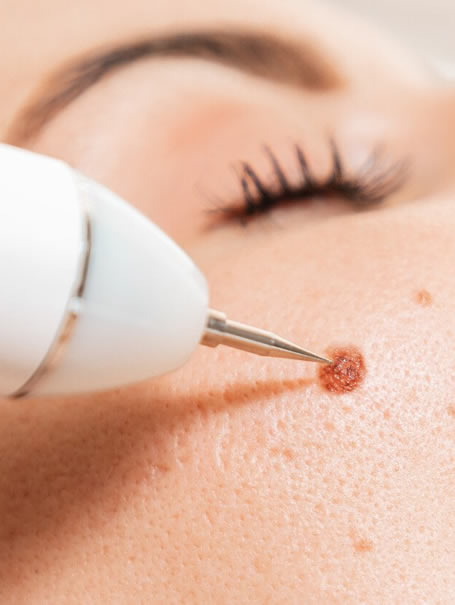
If treatment is appropriate, the cryotherapy device is positioned carefully over the lesion.
A controlled burst of extreme cold is then applied to the targeted area.
The actual freezing stage is often very quick and may take only several seconds depending on the lesion.
Does Cryotherapy Hurt?
People experience cryotherapy differently.
During treatment, you may notice a strong cold sensation, tingling or a brief stinging feeling.
Because the treatment itself is normally very short, any discomfort is generally brief as well.
The treated area may remain slightly sensitive afterwards.
Your practitioner will explain what you are likely to experience and provide appropriate aftercare information following treatment.
What Happens After Cryotherapy?
The appearance of the treated area can change during the healing process.
You may notice some redness shortly after treatment. The area can also become darker as the treated tissue responds to freezing.
Depending on the lesion and the location, a small blister or crust may develop.
This forms part of the body’s natural healing response.
It is important to avoid picking at the area. Instead, allow the treated skin to heal naturally.
The practitioner will provide advice about caring for the area following your appointment.
How Long Does Cryotherapy Take?
One of the major benefits of cryotherapy is its speed.
The freezing process itself can take just a few seconds for a small lesion.
The full appointment will normally take longer because the practitioner needs to assess the area beforehand and discuss the treatment with you.
Even so, cryotherapy is generally a convenient treatment for people who do not want a lengthy procedure.
Most people can continue with their normal daily activities afterwards.
Will One Treatment Be Enough?
This depends on the type, size and thickness of the lesion.
Some small lesions may respond well to a single treatment.
Others may require another session after the area has healed.
Warts in particular can sometimes require repeated treatment because they can extend deeper into the skin.
Your practitioner can give you a clearer idea of what to expect after assessing the individual lesion.
Can Cryotherapy Leave a Mark?
Any treatment that affects the skin has the potential to temporarily change its appearance.
Following cryotherapy, the area may look red, darker or lighter than the surrounding skin while healing takes place.
In some cases, changes in pigmentation can last longer.
This is one reason why treatment should be carefully targeted and carried out by an experienced practitioner.
Your consultation provides an opportunity to discuss the potential benefits, expected healing process and possible side effects before deciding whether to proceed.
Why You Should Not Remove Skin Lesions Yourself
There are many home remedies and products advertised for removing skin tags and other lesions.
However, attempting to remove a lesion without knowing exactly what it is can carry unnecessary risks.
Cutting, burning or tying off skin growths yourself can cause bleeding, infection, scarring or damage to the surrounding skin.
There is also the risk of trying to remove something that should have been medically assessed instead.
Professional assessment gives you greater confidence that the lesion is suitable for treatment before removal begins.
When Should a Skin Lesion Be Checked?
Any skin lesion that changes significantly should receive appropriate medical attention.
Warning signs can include changes in size, shape, colour or texture. A lesion that repeatedly bleeds, becomes painful or develops an unusual appearance should also be assessed.
Cryotherapy is intended for suitable lesions that have been identified as appropriate for treatment.
If there is any concern about the nature of a lesion, assessment should come before cosmetic removal.
The Benefits of Professional Cryotherapy
Cryotherapy has become popular because it combines precision with convenience.
Treatment is generally quick, the surrounding skin can be carefully avoided and there is usually very little interruption to your normal routine.
For people who have a troublesome skin tag, wart or other suitable benign lesion, this can make cryotherapy an appealing alternative to simply continuing to live with the problem.
Professional treatment also means you have the benefit of an assessment before anything is removed.
Cryotherapy in Poulton-le-Fylde
MD Health provides professional cryotherapy treatment from its clinic in Poulton-le-Fylde.
The clinic takes a personalised approach to treatment, beginning with an assessment to determine whether cryotherapy is appropriate for your particular skin concern.
Whether a skin tag keeps catching on clothing or an unwanted lesion has started affecting your confidence, professional advice can help you understand the options available.
Cryotherapy can offer a fast and precise solution for many suitable benign skin lesions without requiring a lengthy procedure or complicated recovery.
If you are considering skin lesion removal in Poulton-le-Fylde, an initial consultation with MD Health can help determine whether cryotherapy is the right treatment for you.
Frequently Asked Questions About Cryotherapy
What skin problems can cryotherapy treat?
Cryotherapy can be used for a range of suitable benign skin lesions, including skin tags, certain warts, age spots and other superficial imperfections. The lesion should be assessed before treatment.
How long does cryotherapy take?
The actual freezing treatment can take only a few seconds for a small lesion. The complete appointment also includes assessment, preparation and aftercare advice.
Is cryotherapy painful?
You may experience a brief cold, stinging or tingling sensation. Any discomfort is normally short-lived because the freezing process itself is very quick.
How long does the skin take to heal?
Healing time varies depending on the lesion, treatment area and individual skin. The treated area may become red, darker or develop a small crust before gradually healing.
Can a skin lesion come back after cryotherapy?
Some lesions may require more than one treatment, and certain conditions such as warts can sometimes return. Your practitioner can explain the likely outcome after assessing the area.
MD Health
28 Hardhorn Road,
Poulton-le-Fylde,
FY6 7SR